
A brand archetype is a familiar character pattern, like the Explorer, the Sage or the Creator, that a brand uses to shape how it looks, sounds and behaves. In a crowded market, a logo alone is just a bookmark. People remember stories and characters. Choosing an archetype gives your brand a consistent personality, so every illustration, colour and sentence points in the same direction.
Where archetypes come from
The idea draws on psychologist Carl Jung’s work on archetypes, recurring characters found in myths and stories across cultures. Marketers later adapted them into a set of twelve brand archetypes, popularised by Margaret Mark and Carol Pearson’s book The Hero and the Outlaw. They work because audiences recognise these patterns instantly, without needing them explained.
The twelve archetypes in brief
- Innocent, Explorer, Sage: purity, discovery, wisdom
- Hero, Outlaw, Magician: courage, rebellion, transformation
- Everyman, Lover, Jester: belonging, intimacy, fun
- Caregiver, Ruler, Creator: care, control, originality
Most brands lead with one archetype and borrow a little from a second. Mixing too many blurs the personality. If your brand feels like a Hero in one post and a Jester in the next, people won’t know what to expect from you, and trust grows more slowly.
It also helps to look at competitors. If every wellness brand in your space is a Caregiver with soft pastel photos, a Sage or Explorer approach can make you stand out while still serving the same audience.
Choosing your archetype
- List your values and the feeling you want people to have after meeting your brand.
- Describe your ideal client and what they’re looking for.
- Match the two to the archetype whose motivation fits best.
- Test it: does it feel natural, or like a costume?
Purple Parlo, for example, leans on the Explorer (curiosity, the outsider’s view), the Creator (original illustration) and a touch of the Sage (psychology and meaning). I describe that outsider view in Drawing from the Outside.
Turning an archetype into visuals
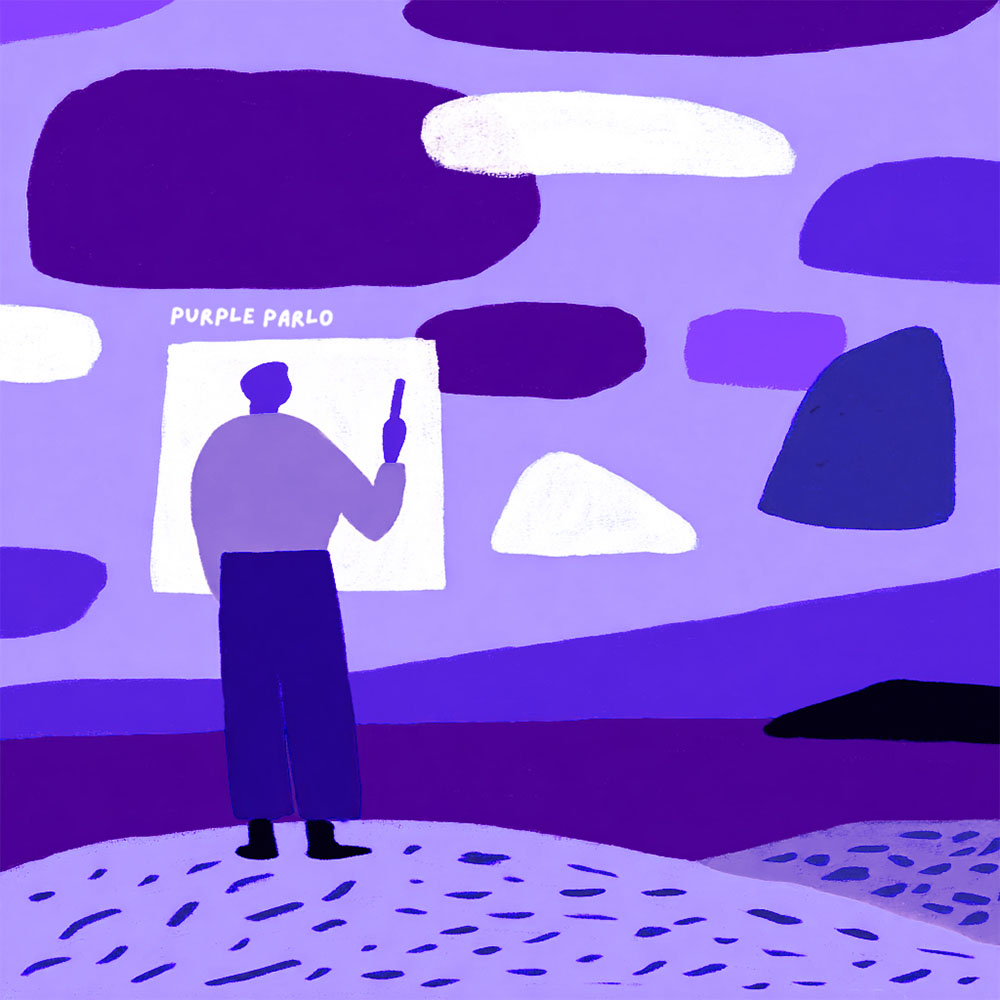
- Explorer: open landscapes, horizons, small figures in large spaces.
- Caregiver: soft shapes, warm colours, figures holding or sheltering.
- Sage: clean layouts, symbols, calm and balanced compositions.
- Jester: bright colours, playful characters, unexpected details.
Illustration is one of the strongest ways to express an archetype, because characters and scenes carry story directly. Packaging and product art benefit especially; see Product Branding Narrative.
Keep it consistent
An archetype only works if you stick with it. Write it into your style guide: colours, character rules, tone of voice, words you use and avoid. HubSpot’s guide to brand archetypes has more examples. For your own written values, see Visual Brand Manifesto.
Frequently asked questions
Can a small creative business use archetypes?
Yes. They’re especially useful for solo artists, because they give a clear frame for decisions.
Can I change archetype later?
You can, but it means updating visuals and messaging everywhere. Choose carefully and refine rather than switch.
Do archetypes limit creativity?
They give direction. Within that direction you have plenty of freedom.
Need illustrations that express your brand’s archetype? See my portfolio or contact me.
Wish You a Purple Day!