
A visual brand manifesto is a short statement of what you believe as an artist and how those beliefs show up in your work. It’s more than a style guide. A style guide says “use these colours”. A manifesto says why. For freelance illustrators, it helps agencies and art directors understand what they’d get by hiring you, and it helps you stay consistent when opportunities pull you in different directions.

Why artists need one
- Clarity: clients understand your point of view quickly.
- Consistency: your work across media feels like one body of work.
- Filtering: you attract clients who want what you offer and discourage poor fits.
- Lower risk for agencies: a clear, stable vision makes your output predictable in a good way.
What to include
- Your belief about art: for example, “Art translates feelings into visible metaphor.”
- Your perspective: what shapes how you see. Mine is the outsider’s view, described in Drawing from the Outside.
- Your visual rules: palette, shapes, composition, what you never do.
- Who you serve: the people and organisations your work is for.
- Your promise: what clients can count on, like clear communication and on-time delivery.
A short example
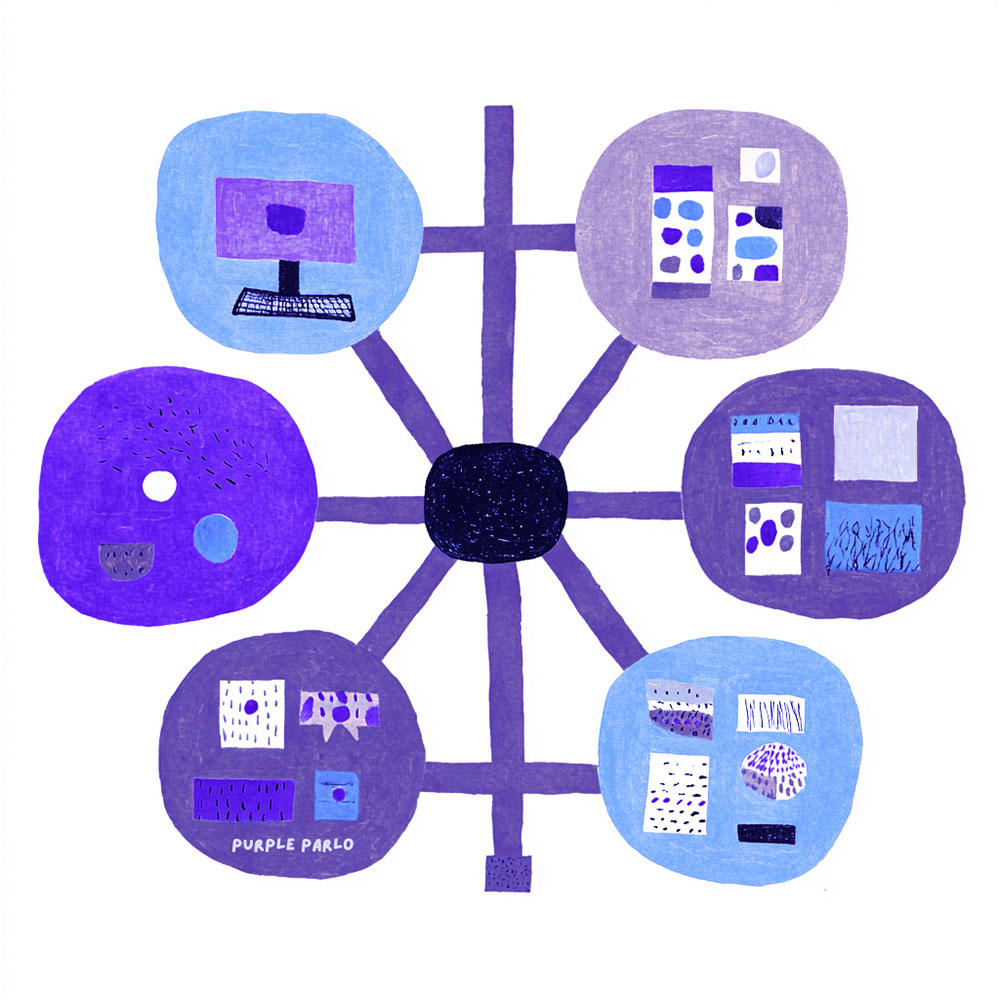
I draw feelings that are hard to name. I use bold, simple shapes, lots of space and many shades of purple, because clarity makes difficult things easier to look at. My figures are a little strange, because many of us feel a little strange. I work with people who want honest, thoughtful images, and I deliver on time.
Short, specific and in plain words. That’s enough.
Notice what the example leaves out: awards, buzzwords, a list of every tool. A manifesto isn’t a CV. It’s a statement of intent that helps the right people recognise themselves in your work. If you’re unsure whether a line belongs, ask: would a client make a different decision after reading it? If not, cut it.
Where to use it
- Your About page and portfolio introduction
- Proposals and pitch decks
- A one-page PDF you send to agencies
- Your own reference when deciding which projects to take
Write clearly
A manifesto full of jargon has the opposite effect. Use plain language and concrete details. The plain language guidelines are a useful check. The design organisation AIGA publishes resources on designer identity and professional practice if you want more context.
Connect it to your brand archetype
If you’ve chosen a brand archetype, your manifesto should express it. An Explorer manifesto talks about curiosity and discovery; a Caregiver one talks about comfort and safety. The two tools support each other.
Frequently asked questions
How long should a manifesto be?
Between 50 and 200 words. Short enough to remember.
Should I publish it?
Yes, at least a version of it. Clients find it helpful, and it signals confidence.
How often should I update it?
Review it once a year or when your work shifts noticeably.
See the manifesto in action in my portfolio, or contact me.
Wish You a Purple Day!