
Trauma Illustration: Why Visual Metaphors Offer Deeper Healing Than Words
The modern creative landscape demands content that cuts through the noise with authenticity and psychological depth. For purpleparlo.com, which is founded on the principles of bold minimalism, psychological insight, and the alien perspective, exploring complex topics like trauma requires a communication method capable of reaching beyond the limits of conventional language. This is why trauma illustration offers such a profound path toward healing and comprehension: visuals provide essential metaphors that bypass cognitive defenses and translate abstract internal experiences into tangible, relatable forms.

The Failure of Language in Lived Experience
Trauma is, by definition, an experience that exceeds the capacity of the mind to process and the mouth to articulate. The deepest wounds often reside in realms that linear narrative cannot reach, manifesting instead as fragmented memories, sensory overload, or dissociation. Words, which rely on defined syntax and logic, frequently fail when attempting to capture this inner chaos.
When individuals attempt to describe traumatic experiences using literal language, the result is often a feeling of profound ineloquence. The standard vocabulary of emotion seems hollow when faced with the complexity of lived pain. For many who experience deep psychological distress, words feel external, sterile, or insufficient. They lack emotional bandwidth, invite misunderstanding, and often reinforce isolation.
The goal of trauma illustration is not to replace verbal therapy, but to provide an intermediary language—a visual vocabulary that honors the complexity of the inner world.
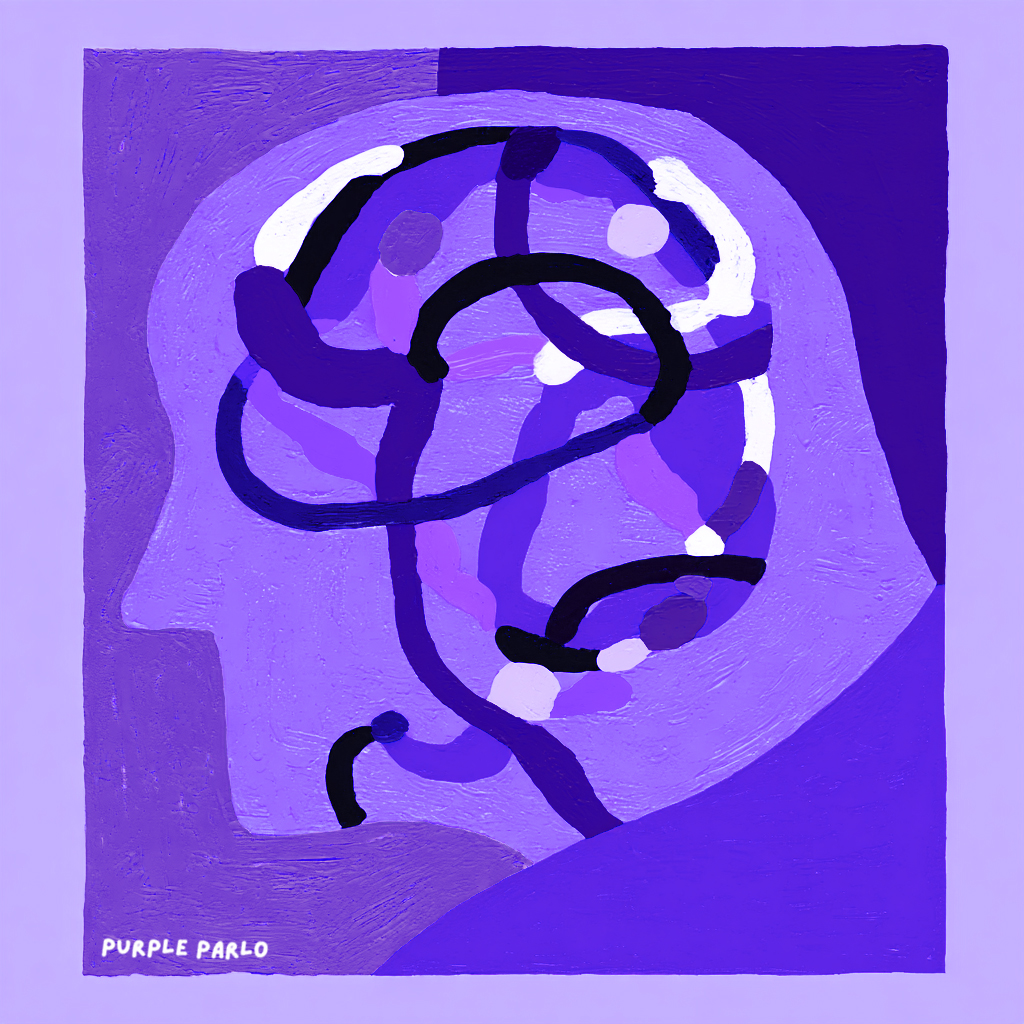
The subconscious communicates in images, not sentences. Dreams, intrusive thoughts, and emotional processing often rely on symbols, colors, and forms that defy linguistic categorization. Visual metaphors allow difficult concepts, such as intrusive thoughts or emotional dysregulation, to be externalized and recognized. When the visual metaphor succeeds, the viewer experiences recognition and validation. This act of recognition initiates healing that purely verbal discussion often cannot.

The Power of the Visual Metaphor: Making Chaos Readable
Trauma illustration leverages aesthetics not for decoration, but for psychological function. It consciously employs structure and symbolism to transform overwhelming complexity into communicable form.
A key concept in psychology-inspired art is symmetry. Raw emotional material is often experienced as chaotic or fragmented. The careful use of symmetry and visual balance translates this chaos into readable, organized visual information. Balanced composition represents psychological integration and provides a sense of stability. Precision and detail in rendering also signal professionalism and trust, which are essential when dealing with sensitive psychological themes.
The alien perspective plays a central role in visualizing disconnection. It frames the experience of being different or misunderstood as a valid point of view rather than a flaw. Rooted in neurodiversity, this perspective provides symbolic language for dissociation, hypersensitivity, and emotional distance. It normalizes difference and turns alienation into a shared sense of belonging.

From Personal Insight to Professional Application
The value of trauma illustration extends beyond personal expression into professional practice. Therapists, counselors, and mental health organizations increasingly recognize that text-based communication alone fails to engage diverse audiences. Visual storytelling helps explain complex psychological frameworks quickly and empathetically.
Specialized mental health illustration services enable clinicians and agencies to communicate abstract concepts such as trauma, memory fragmentation, and emotional regulation with clarity. Illustrations grounded in psychological insight demonstrate expertise, authority, and trustworthiness. Custom human mind concept art allows complex internal experiences to be translated into visuals that resonate immediately.
Authenticity is essential in this space. Audiences trust content that is transparent, intentional, and emotionally honest. Trauma illustration functions as a translation of emotion into visible form, requiring both ethical storytelling and technical precision. Detail-oriented execution and reliable file delivery reinforce credibility and support long-term professional partnerships.

Bold Minimalism and the Art of Detail
Bold minimalism is central to the visual language of trauma illustration. It is not an aesthetic trend, but a functional choice designed to prioritize clarity and emotional impact. In sensitive contexts, visual noise can mirror internal overwhelm. Minimalism counters this by removing unnecessary elements and focusing attention on what truly matters.
Every line, color, and shape carries intention. High contrast and restrained palettes create strong visual hooks while maintaining readability. This clarity enhances scannability, particularly for viewers who struggle with sensory overload or information fatigue.
Trauma illustration also operates within a broader creative ecosystem. Psychological depth developed through personal work informs commercial projects, ensuring consistency across outputs. Technical discipline and attention to detail are not merely stylistic choices, but stabilizing mechanisms that enable reliable professional delivery.
Conclusion: Translating Feeling into Form
Trauma illustration provides a vital alternative language where words fall short. Through visual metaphors, bold minimalism, and structured composition, it transforms internal chaos into recognizable form. This approach validates lived experience, fosters emotional recognition, and builds trust.
By embracing psychological depth and technical precision, purpleparlo.com offers specialized mental health illustration services that resonate with both individuals and professional audiences. Trauma illustration is not decoration—it is translation, clarity, and connection made visible.